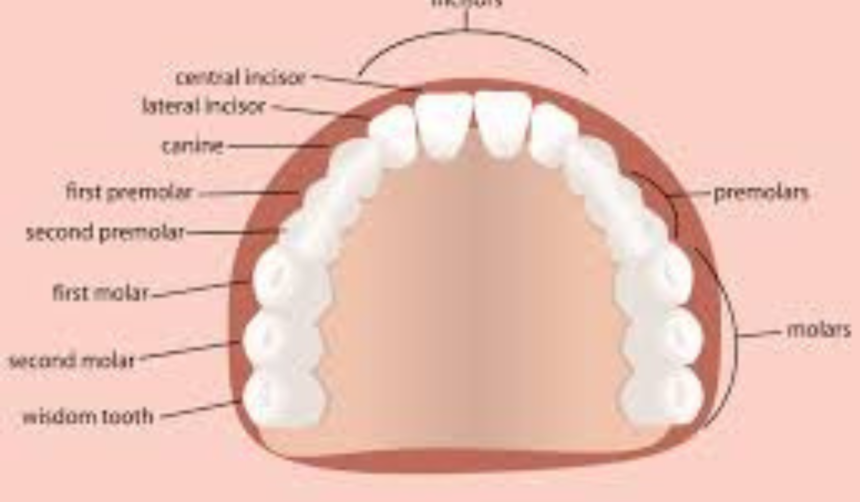
An adult mouth usually has 32 permanent teeth when all four wisdom teeth are present.
A clear tooth chart helps identify each tooth by name, number, position, and function.
This guide explains the full layout in simple language, including missing or removed third molars.
Quick Bio
| Feature | Details |
|---|---|
| Core definition | An adult tooth chart with wisdom teeth is a labeled map of all permanent teeth, including the four third molars at the back of the mouth. |
| Origin | Dental charting developed from early anatomical drawings and clinical record systems used to track tooth position, disease, extraction, and restoration. |
| Primary use | Dentists use it to identify teeth, document treatment, explain X-rays, plan procedures, and communicate clearly with patients. |
| Industry | The main industries are dentistry, oral surgery, orthodontics, dental education, insurance coding, and dental software. |
| Common materials | Charts appear as paper diagrams, laminated posters, digital forms, intraoral scan models, X-ray overlays, and patient education graphics. |
| Popular applications | Common uses include explaining wisdom teeth, showing tooth numbers, planning extractions, tracking cavities, and teaching adult dental anatomy. |
What Is an Adult Tooth Chart With Wisdom Teeth?
An adult tooth chart with wisdom teeth shows the full permanent dentition: incisors, canines, premolars, molars, and third molars. It is not just a picture of teeth. It is a practical reference that connects tooth names, numbers, locations, and clinical notes.
Most charts show the upper jaw and lower jaw as two arches. The front teeth sit in the middle, while the molars sit toward the back. Wisdom teeth appear at the far ends of the arches when they are present.
Why Wisdom Teeth Matter on the Chart
Wisdom teeth are also called third molars. They matter because they are included in a complete adult count, yet many people have one, two, three, four, or none visible in the mouth.
A precise chart helps avoid confusion. For example, a patient may say “back tooth,” while a dentist may record tooth #1, #16, #17, or #32 depending on the position.
Complete Adult Teeth Count: 28 vs. 32
A full adult tooth chart with wisdom teeth usually includes 32 permanent teeth. That total includes 16 upper teeth and 16 lower teeth.
Many adults have 28 teeth after wisdom teeth are removed or if they never erupt. This does not automatically mean the mouth is unhealthy. Dentists look at comfort, alignment, bite function, gum health, and available jaw space.
Tooth Numbering: How Dentists Read the Chart
Starting at the top right, tooth number one marks the last molar back there. Moving left across the upper jaw, that pattern continues until reaching number sixteen, sitting on the far left side. From here, the next step drops down to the bottom row, beginning with seventeen on the left. Counting forward through each position leads finally to thirty two, found at the very end of the lower right section.
Every grown-up tooth gets its spot on the chart, including wisdom ones. Because of that, tracking cavities shows up clear. Fillings appear exactly where they belong. Crowns go marked in their place too. Gum problems find a space all their own. Even past removals stay recorded right there. Words like “maybe” or “sort of” fall away completely. Clarity comes through each detail laid out plainly.
Full Adult Tooth Chart With Wisdom Teeth by Position
Here is a simplified adult layout using the common U.S. numbering style:
| Area | Tooth Numbers | Main Tooth Types |
| Upper right | #1–#8 | Wisdom tooth, molars, premolars, canine, incisors |
| Upper left | #9–#16 | Incisors, canine, premolars, molars, wisdom tooth |
| Lower left | #17–#24 | Wisdom tooth, molars, premolars, canine, incisors |
| Lower right | #25–#32 | Incisors, canine, premolars, molars, wisdom tooth |
A complete adult tooth chart with wisdom teeth places the third molars at the four corners of the chart. They are the last teeth in each back quadrant.
Wisdom Teeth Location and Eruption Timing
Wisdom teeth sit behind the second molars. They are the final molars on the upper right, upper left, lower left, and lower right sides.
They often erupt during the late teen years or early adulthood. Some come in straight, some stay partly covered by gum tissue, and some remain impacted under the gum or jawbone. Pain, swelling, pressure, decay risk, and infection risk are common reasons a dentist may evaluate them.
Tooth Types, Names, and Jobs
An adult tooth chart with wisdom teeth is easier to read when each tooth group has a clear job. Incisors cut food. Canines grip and tear. Premolars crush and guide chewing. Molars, including wisdom teeth when useful, grind food at the back of the mouth.
The standard adult pattern includes 8 incisors, 4 canines, 8 premolars, and up to 12 molars. The last four molars are the wisdom teeth.
Dental Chart Materials and Formats
Dental charts come in many formats. Clinics may use digital charting screens, printed forms, laminated wall charts, educational posters, 3D jaw models, or X-ray-based diagrams.
Commercial versions often focus on different users. A pediatric office may show eruption comparisons, an oral surgery clinic may highlight impacted third molars, and a general dental office may use a chart designed for fillings, crowns, bridges, implants, and extractions.
Modern Clinical Uses
A dentist uses an adult tooth chart with wisdom teeth to record findings quickly. One tooth may need a filling, another may have a crown, and a wisdom tooth may be marked as impacted, erupted, missing, or extracted.
The chart also supports treatment planning. It helps patients understand why a back tooth is being watched, why an X-ray matters, or why a wisdom tooth is not treated the same way as a front tooth.
Common Variations Dentists Record
Not every adult mouth matches the textbook diagram. Some people are born without certain teeth. Others have extra teeth, retained baby teeth, rotated teeth, crowded teeth, implants, bridges, or previous extractions.
An adult tooth chart with wisdom teeth should leave room for these real-life differences. A good chart does not only show ideal anatomy; it records what is actually present.
Regional and Professional Charting Differences
Tooth numbering is not identical everywhere. The U.S. often uses the Universal Numbering System, while many international clinics use the FDI two-digit system.
This matters for travel, second opinions, insurance paperwork, and dental tourism. A tooth labeled #32 in one system may not be written the same way in another, so the charting method should always be clear.
Historical Origins of Tooth Charts
Tooth charts grew from anatomical illustration, surgical notes, and the need for consistent dental records. As dentistry became more standardized, numbered and coded charts helped clinicians describe teeth with less guesswork.
The wisdom tooth gained special attention because it appears late and often creates space problems. That made the adult tooth chart with wisdom teeth especially useful in oral surgery and orthodontic assessment.
Future Trends in Digital Tooth Mapping
Now pictures of teeth look real instead of drawn on paper. Scanners inside the mouth team up with special X-rays to build models you can turn around. Software pieces together each step a dentist might take. Portals let people see their own teeth like objects floating online.
One day, charts might link each tooth to how hard it bites, along with gum depth, X-ray clues, where implants fit, plus signs of new teeth pushing through. Even then, top tools won’t try to do everything – just one clear job: showing what’s really happening inside the mouth.
FAQs
- What is an adult tooth chart with wisdom teeth used for?
It is used to show all permanent teeth, including the four third molars. Dentists use it for exams, treatment planning, X-ray review, extraction notes, restorations, and patient education. - Are wisdom teeth included in the 32 adult teeth?
Yes. A full set of 32 adult teeth includes four wisdom teeth. If those teeth are removed, impacted, or never develop, the visible count may be lower. - What numbers are wisdom teeth on an adult tooth chart?
In the U.S. Universal Numbering System, wisdom teeth are usually #1, #16, #17, and #32. These numbers mark the four back corners of the adult mouth. - Is 28 teeth normal if wisdom teeth are missing?
Yes, 28 teeth can be normal when wisdom teeth have been removed or never erupted. A dentist can confirm whether the remaining teeth, bite, gums, and jaw are healthy. - Can a tooth chart show impacted wisdom teeth?
Yes. A clinical chart can mark wisdom teeth as erupted, partially erupted, impacted, missing, or extracted. X-rays are usually needed to see wisdom teeth hidden under gum or bone.
Conclusion
An adult tooth chart with wisdom teeth gives patients and dental professionals a shared language. It shows where each tooth sits, what it is called, what number it has, and how wisdom teeth fit into the full adult mouth.
Use the chart when reviewing dental records, reading treatment plans, comparing X-rays, or preparing questions before a dental visit. The most useful next step is simple: know your wisdom tooth numbers, ask whether they are erupted or impacted, and keep a copy of your updated dental chart for future care.