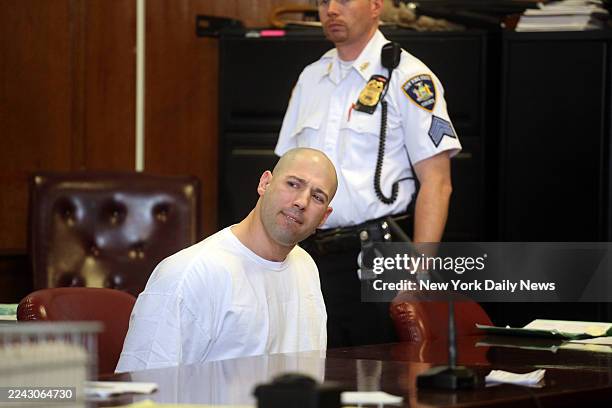
Thomas Gelardo is a New York man who has drawn public attention because of federal allegations involving organized crime, illegal gambling, and rigged high-stakes poker games. In October 2025, federal prosecutors announced charges against 31 defendants in what became widely known as the investigation into illegal and allegedly rigged poker operations. Prosecutors identified Thomas Gelardo, also known as “Juice,” as one of the defendants.
The case attracted unusual attention because it involved alleged links between organized-crime groups and high-profile figures from professional basketball, including former NBA players and Portland Trail Blazers head coach Chauncey Billups.
However, an important distinction should be made from the beginning: the allegations in an indictment are not convictions. The U.S. Department of Justice explicitly stated that defendants are presumed innocent unless and until proven guilty.
That distinction is particularly important when researching Thomas Gelardo, because online sources sometimes mix allegations, historical records, and established court findings.
Why Is Thomas Gelardo in the News?
The main reason Thomas Gelardo has attracted renewed attention is the federal investigation announced in October 2025.
According to the U.S. Attorney’s Office for the Eastern District of New York, prosecutors charged 31 people in schemes involving illegal poker games, alleged cheating technology, organized crime, extortion, and related financial activity. The investigation involved alleged members and associates of several organized-crime families.
The poker games were reportedly operated in locations including Manhattan and other areas, with prosecutors alleging that some games were deliberately manipulated.
The case became especially prominent because professional basketball figures were allegedly involved as participants or promoters, giving the investigation a much broader public profile than an ordinary gambling case.
For Thomas Gelardo, prosecutors alleged a specific role connected with one of the poker operations.
The allegations should be understood within the larger federal case rather than treated as isolated claims.
What Did Prosecutors Allegedly Say About Thomas Gelardo?
According to the federal indictment, Thomas Gelardo, identified by the nickname “Juice,” was among defendants connected to the alleged organization of illegal poker games. The indictment alleged that certain organizers were required to make payments to Gelardo and other defendants associated with organized-crime groups.
The government also alleged that Gelardo participated in efforts to collect gambling debts.
One particularly serious allegation concerns an incident between November 2022 and February 2023. Prosecutors alleged that Gelardo, along with other defendants, extorted an individual identified as John Doe #5 in an effort to secure repayment of a gambling debt. The indictment alleges that Gelardo and another defendant punched the victim.
Again, these are prosecutorial allegations contained in an indictment, not findings that should be presented as established facts.
That distinction is essential when discussing an ongoing criminal proceeding.
What Was the Alleged Poker Scheme?
The broader case involving Thomas Gelardo centered on high-stakes poker games that prosecutors say were not always fair.
According to federal authorities, some of the games allegedly used sophisticated technology to manipulate outcomes.
Reports described technology including modified card-shuffling equipment, specialized lenses, electronic devices, and other methods allegedly designed to identify or predict cards. Reuters reported that prosecutors described a system involving altered shufflers, electronic chip trays, special lenses, and card analyzers.
The alleged operation therefore went beyond ordinary illegal gambling.
Prosecutors described a system in which wealthy players were allegedly attracted to private games, while cheating technology was allegedly used to influence results.
The presence of professional athletes and other recognizable figures made the case particularly newsworthy.
What Role Did Thomas Gelardo Allegedly Play?
The precise allegations against Thomas Gelardo are best understood by examining the federal indictment rather than relying solely on headlines.
Prosecutors alleged that Gelardo was connected to the Lexington Avenue Game, one of the illegal poker operations described in the case.
The indictment alleged that organizers of the Lexington Avenue Game were required to make payments to several defendants, including Gelardo. Prosecutors also alleged that Gelardo supervised aspects of the Lexington Avenue poker operation and received a portion of proceeds.
News coverage has described him as an alleged associate of the Bonanno crime family.
CBS News, for example, reported that prosecutors identified Gelardo as an alleged Bonanno associate and alleged that he supervised the Lexington Avenue poker game and received a share of proceeds.
These descriptions should remain qualified because the case concerns criminal allegations that were still being litigated.
What Is the “Juice” Nickname Associated With Thomas Gelardo?
The nickname “Juice” is repeatedly used in official federal case documents.
The U.S. Department of Justice identified Thomas Gelardo, also known as “Juice,” among the defendants in the 2025 indictment.
Court records related to his later appeal also use the same designation.
The nickname is therefore not merely an invention of online articles. It appears in formal court records and government documents associated with the case.
Is Thomas Gelardo Connected to Organized Crime?
The public record contains multiple references connecting Thomas Gelardo to alleged organized-crime activity.
In the 2025 federal case, prosecutors described him in connection with organized-crime defendants and alleged that the poker operation involved members and associates of several La Cosa Nostra families.
However, there is another important complication.
There is also an older Thomas Gelardo, a different individual, who was identified by federal prosecutors in 2006 as a soldier in the Lucchese organized crime family. That man was involved in a separate fraud case and was sentenced in 2007.
This creates a potential identity problem.
Researchers should not automatically combine the records of the older Thomas Gelardo with the younger defendant in the 2025 poker case.
Why Is It Important to Distinguish Two Thomas Gelardos?
This is one of the most important details when researching Thomas Gelardo online.
The older Thomas Gelardo was described by the U.S. Attorney’s Office in 2007 as a Lucchese crime-family soldier. He pleaded guilty to conspiracy involving false tax returns, health care fraud, and mail fraud and received a sentence of one year and one day.
The defendant in the 2025 federal poker case was identified by prosecutors as 42-year-old Thomas Gelardo of Scarsdale, New York, also known as “Juice.”
A recent legal analysis also explicitly noted that the older individual and the younger defendant are different people.
This distinction demonstrates why biographical research should rely on primary documents whenever possible.
A shared name does not establish a shared identity.
What Happened to Thomas Gelardo in 2025?
In October 2025, Thomas Gelardo was among the defendants named in the federal indictment concerning alleged illegal and rigged poker games.
The indictment was filed in the Eastern District of New York and contained multiple criminal counts relating to the alleged schemes. A government-filed copy identifies Gelardo by name and includes him among the defendants in the broader case.
The government’s allegations included illegal gambling activity, racketeering-related conduct, fraud, money laundering, and other offenses across the broader group of defendants.
Not every allegation applies identically to every defendant.
That is why it is more accurate to discuss Gelardo’s specific alleged conduct separately from the overall allegations against the entire group.
What Was Operation Royal Flush?
The investigation was widely referred to as Operation Royal Flush in media coverage.
The case involved alleged illegal poker games connected with organized-crime groups and high-profile sports figures. Prosecutors alleged that some games were rigged through technology designed to give certain participants an unfair advantage.
The investigation became a major story because it combined several elements that rarely appear together in one federal case:
- High-stakes poker
- Alleged organized crime
- Technology-assisted cheating
- Alleged extortion
- Professional basketball connections
- Money laundering allegations
- Multiple federal defendants
For Thomas Gelardo, the case placed his name in national and international news coverage.
What Happened With Thomas Gelardo’s Bail?
Following his arrest, Thomas Gelardo challenged his pretrial detention.
The matter eventually reached the U.S. Court of Appeals for the Second Circuit under United States v. Aiello. Court records show that Gelardo was the appellant in the case.
The Second Circuit’s February 2026 summary order states that Gelardo appealed an order denying his motion for pretrial release under the Bail Reform Act.
The appellate court affirmed the November 19, 2025 district-court order.
This is one of the most significant recent developments in the public record because it provides an official judicial update rather than relying on secondary reporting.
What Does the 2026 Court Record Show?
As of 2026, the public record shows that Thomas Gelardo remained involved in federal litigation connected to the 2025 case.
The Second Circuit appeal was filed in December 2025. The docket identifies Gelardo as the appellant and the United States as the appellee.
In February 2026, the appellate court issued a summary order affirming the district court’s denial of pretrial release.
This does not mean that every allegation in the indictment has been proven.
It means that, at that stage of the proceedings, the appellate court upheld the district court’s decision concerning pretrial detention.
How Should Readers Interpret Reports About Thomas Gelardo?
When reading online articles about Thomas Gelardo, it helps to separate three categories of information.
1. Established Court Records
These include indictments, judicial orders, appellate decisions, and official government releases.
They are the strongest sources for determining what prosecutors alleged and what courts actually decided.
2. News Reporting
Major news organizations can provide context, interviews, investigative reporting, and explanations of complicated cases.
However, news articles can sometimes simplify complicated legal allegations.
3. Unverified Online Claims
Social media posts, blogs, forums, and unsourced biographies should be treated carefully.
A repeated claim is not automatically a verified claim.
This distinction is especially important when the subject is facing criminal allegations.
Why Did the Case Attract NBA Attention?
The investigation involving Thomas Gelardo attracted exceptional attention because several defendants were connected to professional basketball.
The Justice Department named Chauncey Billups, Damon Jones, and other individuals among the defendants in the broader investigation.
Reuters reported that prosecutors alleged former NBA figures acted as “face cards,” helping attract wealthy players to games that prosecutors said were manipulated.
This connection transformed the story from a relatively specialized organized-crime investigation into a major national sports and legal story.
For Gelardo, the NBA connection is contextual rather than evidence that he personally had a professional basketball career.
What Is Known About Thomas Gelardo’s Earlier Life?
Reliable public information about the early personal life of the younger Thomas Gelardo is limited.
The 2025 federal announcement identifies him as 42 years old and from Scarsdale, New York.
Beyond information directly relevant to the federal case, there is little reason to speculate about his private life.
This is another area where responsible reporting matters.
A strong biography should not fill gaps with unverified claims simply to make an article appear more complete.
What Makes the Thomas Gelardo Case Significant?
The case is significant for several reasons.
First, it illustrates how modern technology can potentially change traditional gambling fraud.
Poker cheating historically depended on human techniques such as collusion, marked cards, or signaling. Prosecutors in this case alleged the use of much more sophisticated technology.
Second, the investigation demonstrated how organized-crime groups can allegedly intersect with legitimate entertainment and sports networks.
Third, it shows how federal prosecutors can combine allegations involving gambling, fraud, extortion, and financial transactions into a much larger investigation.
For legal observers, the case also demonstrates the importance of the presumption of innocence.
What Should You Know Before Searching for Thomas Gelardo Online?
If your goal is to research Thomas Gelardo accurately, start with the federal record.
A useful research process is:
- Check the U.S. Department of Justice announcement.
- Read the actual indictment where possible.
- Check federal court decisions.
- Compare major news reports.
- Separate allegations from convictions.
- Distinguish the younger defendant from the older Thomas Gelardo.
- Avoid treating anonymous online claims as established facts.
This approach produces a much more reliable understanding of the case.
What Is the Current Status of Thomas Gelardo?
As of the latest publicly available court information reviewed for this article, Thomas Gelardo is involved in the federal criminal case arising from the alleged illegal poker operations.
His appeal concerning pretrial detention was rejected by the Second Circuit in February 2026, which affirmed the earlier district-court decision.
The broader criminal proceedings remain a matter of litigation, meaning readers should be cautious with articles that describe allegations as settled facts.
The most accurate description is therefore that Gelardo is a federal criminal defendant facing allegations, not that every accusation against him has been legally established.
Frequently Asked Questions About Thomas Gelardo
Thomas Gelardo, also known as “Juice,” is a New York man who was charged in the 2025 federal investigation into alleged illegal and rigged high-stakes poker games. The U.S. Department of Justice listed him among 31 defendants in the case.
2. What is Thomas Gelardo accused of?
Federal prosecutors allege that Gelardo was involved in the organization of illegal poker games, including the Lexington Avenue Game, and participated in efforts to collect gambling debts. The indictment also alleges that he and another defendant assaulted a person during an effort to collect a gambling debt. These remain allegations unless established in court.
3. What is Thomas Gelardo’s nickname?
Federal prosecutors and court records identify Thomas Gelardo by the nickname “Juice.”
4. Is Thomas Gelardo the same person involved in an older fraud case?
No. Public records indicate that there are at least two different people named Thomas Gelardo who have appeared in organized-crime-related reporting. The older individual was identified in a 2007 Justice Department release as a Lucchese soldier and was sentenced for fraud-related offenses. The younger Thomas Gelardo is the “Juice” defendant in the 2025 poker case.
5. What happened to Thomas Gelardo’s appeal?
Thomas Gelardo appealed the denial of his motion for pretrial release. In February 2026, the U.S. Court of Appeals for the Second Circuit affirmed the November 19, 2025 district-court order.
Conclusion: What the Public Record Really Tells Us
The story of Thomas Gelardo is closely tied to a major federal investigation into alleged illegal and rigged poker games, organized-crime activity, and high-profile connections to the world of professional basketball.
The 2025 indictment placed Gelardo, known as “Juice,” among 31 defendants. Prosecutors alleged that he was connected to the Lexington Avenue poker operation and participated in efforts to collect gambling debts.
But responsible reporting requires a clear line between allegation and fact.
The charges remain allegations unless proven in court, and the Justice Department itself emphasizes that defendants are presumed innocent.
The 2026 appellate record provides another important piece of the story: the Second Circuit affirmed the district court’s denial of Gelardo’s request for pretrial release.
Perhaps the most useful lesson for anyone researching Thomas Gelardo is to rely on primary legal records, distinguish people who share the same name, and avoid sensational claims that go beyond the evidence.
As the federal case continues, court filings and judicial decisions will remain the most reliable way to understand what has actually been established and what remains an allegation.